When a sunscreen says it's "reef-safe," most people assume it won't harm marine life.
But today, that label doesn't have a clear statewide definition in California.
AB 1744 is about making sure environmental claims are honest so consumers can make informed choices.
Why This Matters
Every year, millions of people visit California's beaches. When we swim, sunscreen washes off into the ocean. Some chemical ingredients commonly used in sunscreen have been shown to harm coral reefs, rocky reef habitats, and marine plants.
At the same time, many of these products are still marketed as "reef-safe" or "reef-friendly." That can be confusing and misleading.
AB 1744 focuses on transparency.
What Does the Bill Do?
AB 1744 creates a clear, statewide standard for environmental marketing.
Under this bill:
- Sunscreen products cannot be labeled "reef-safe" or "reef-friendly" if they contain certain chemical UV filters.
- Companies must advertise honestly about environmental impact.
- Consumers can trust that "reef-safe" claims meet a consistent standard.
The bill does not ban sunscreen. It does not restrict your ability to protect your skin. It simply requires truth in labeling.
What About Skin Protection?
Protecting your skin from UV rays is important.
There are two main types of sunscreens:
- Chemical sunscreens – use chemical filters to absorb UV radiation.
- Mineral sunscreens – use zinc oxide or titanium dioxide to physically block UV rays.
AB 1744 does not eliminate options. It ensures that if a product claims to be safe for reefs, that claim is accurate.
Why Focus on Labeling?
Many consumers want to buy environmentally responsible products.
Without clear standards, companies can use eco-friendly language even when products contain ingredients shown to harm marine ecosystems.
This bill protects:
- Consumer trust
- California's marine environments
- Fair competition among manufacturers
How Is California Positioned?
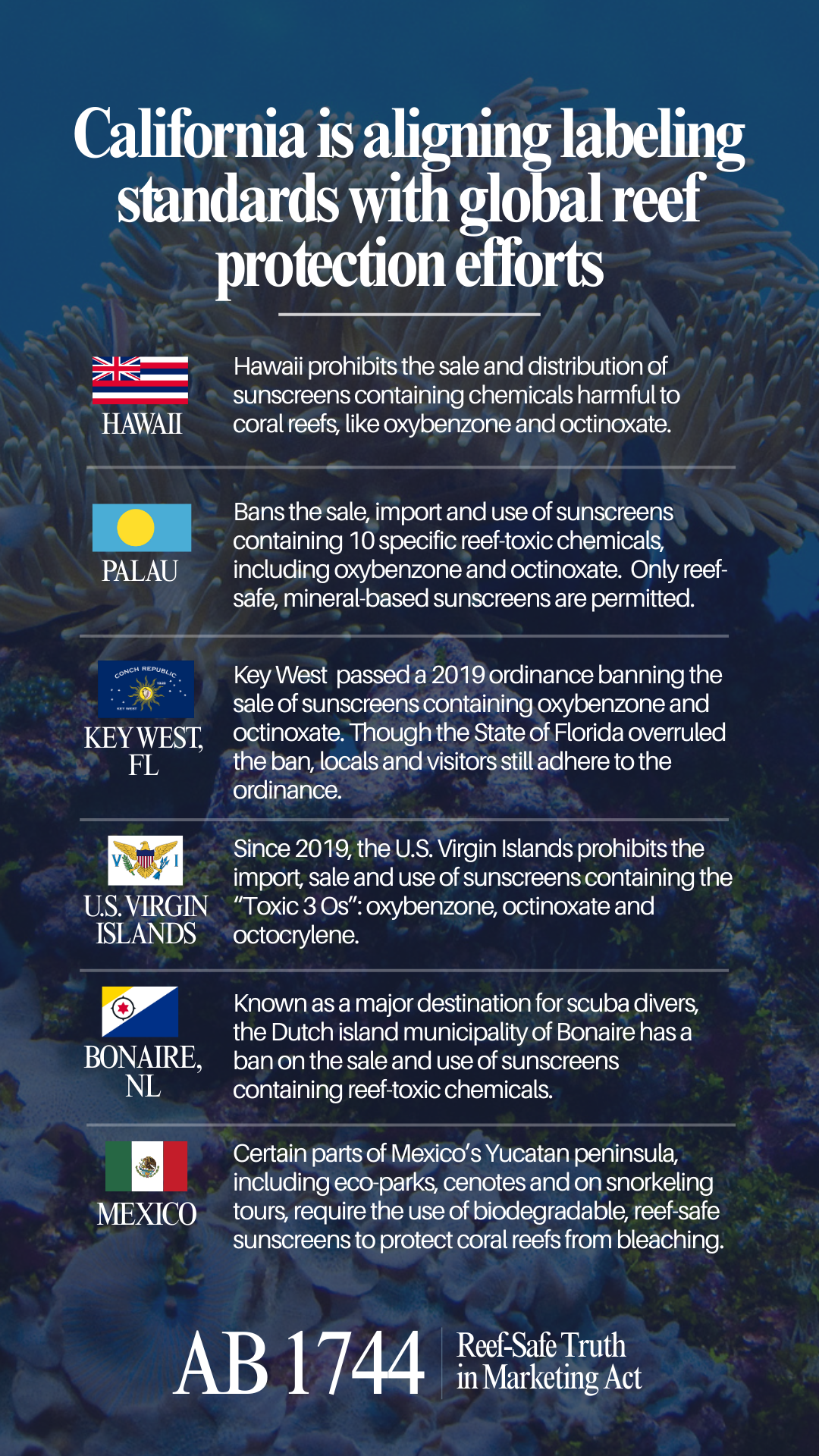
Other regions have already taken action to protect sensitive reef ecosystems, including Hawaii and several island jurisdictions.
AB 1744 aligns California with broader efforts to reduce environmental harm while maintaining access to sunscreen.
Sign Up for Updates
Sign up for updates about this bill and other legislation as it goes through the process.
Further Reading
- National Oceanic and Atmospheric Administration (NOAA) | Skincare Chemicals and Coral Reefs
- National Park Service | Oceans, Coasts & Seashores - Sunscreen
- Smithsonian National Museum of Natural History - Ocean | The Truth About Corals and Sunscreen